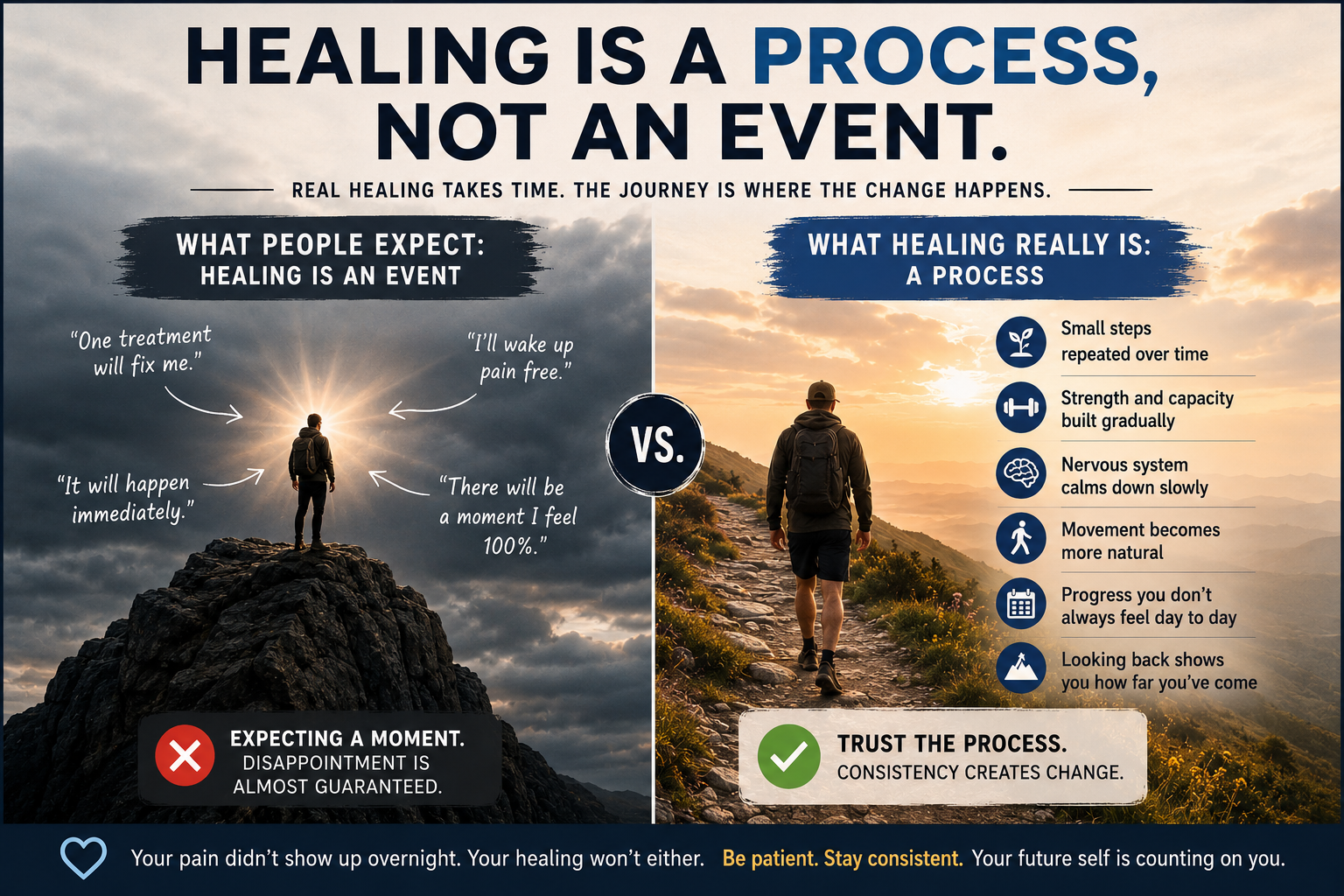
Good physical therapy is often less about creating a single dramatic moment and more about changing the trajectory of the system.
Read More
Good physical therapy is often less about creating a single dramatic moment and more about changing the trajectory of the system.
Read MoreMany people in Marble Falls are currently being told they may have to wait weeks or even months to begin physical therapy. But musculoskeletal problems rarely stay the same while you wait. Pain changes movement, movement changes behavior, and over time the body adapts around the problem. Personalized, one-on-one physical therapy is not simply about getting in faster. It is about understanding the deeper context behind why the problem developed in the first place and rebuilding the strength, movement quality, and capacity needed to keep it from returning.
Read MoreJoint pain often appears when activity increases faster than the body can adapt. Arthritis may be present, but it’s rarely the whole story.
Read MoreMost people think physical therapy is only for recovering from surgery or serious injuries. In reality, PT is about restoring how the body functions—and that affects everything from eliminating aches and pains to improving performance in activities like golf, pickleball, running, and strength training. When movement becomes more efficient and the body can better tolerate stress, pain often improves and performance follows. The key is learning to listen when the body whispers, rather than waiting until it screams.
Read MoreRest can quiet symptoms, but it rarely prepares the body to return to activity. Lasting recovery usually requires rebuilding strength, movement, and tissue tolerance.
Read MoreMany people assume shoulder pain means a rotator cuff tear or the need for surgery. In reality, shoulder pain often comes down to movement quality and how much stress the shoulder can tolerate. When capacity improves, pain often improves too.
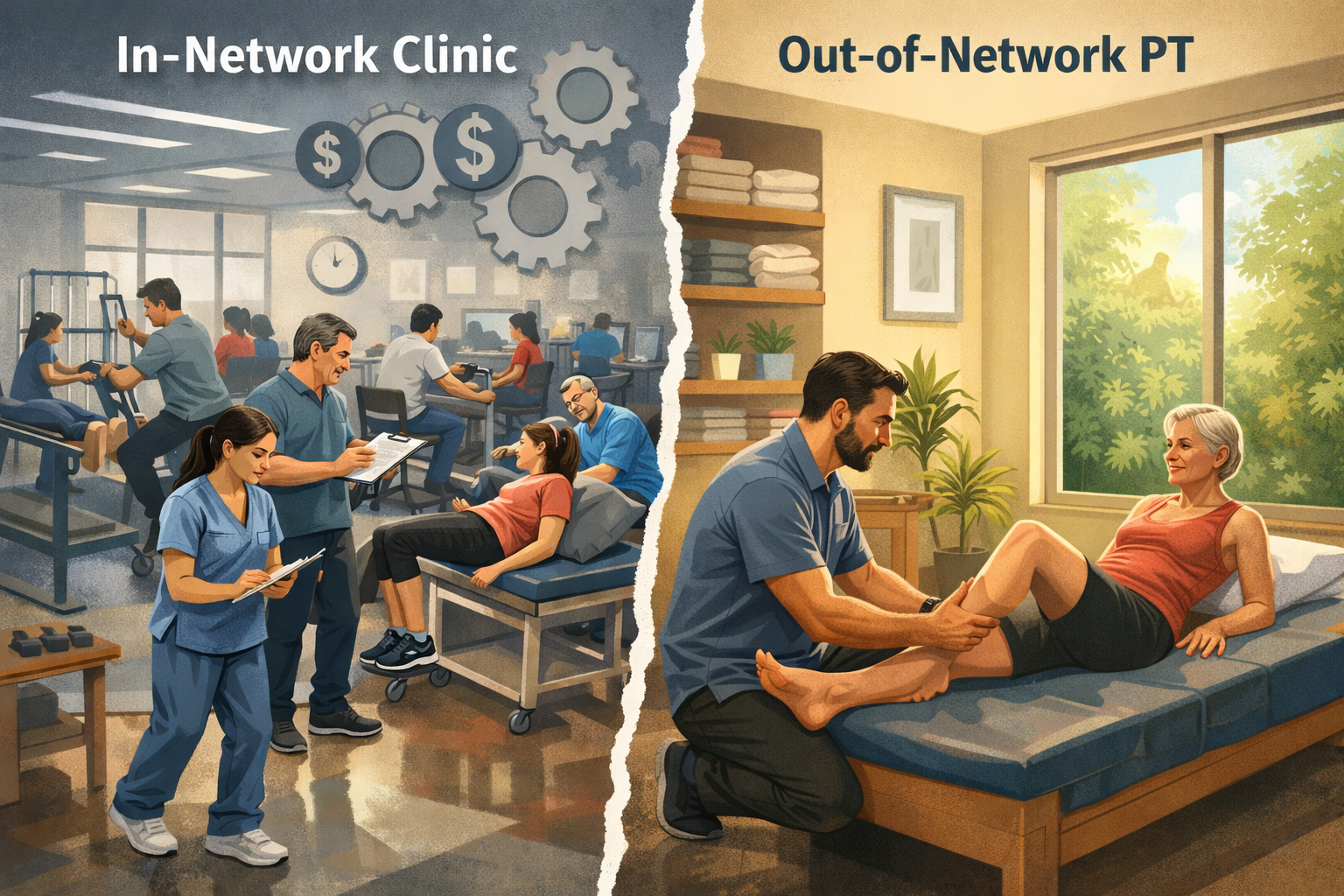
Read MoreMost people assume using insurance for physical therapy is cheaper. But because insurance clinics must see high patient volumes, care is often rushed and less individualized. Out-of-network physical therapy focuses on one-on-one treatment, deeper problem-solving, and faster recovery, often requiring fewer visits and costing less overall.
Read More